Rosemary Characteristics
(Rosemarinus officinalis)
Name Origin:
Derives from its native location near sea coasts – “rose” coming from Ros (meaning dew) and “Mary” from marinus (meaning ocean).
Natural Order:
Labiatæ
Growing Cycle:
Half-hardy evergreen
Origins:
Native to the Mediterranean coast. In ancient times, rosemary was credited with having many virtues hence its “officinalis” or medical name. It was cultivated by the Spaniards as early as the 13th century.Read more on the History of Rosemary.
Height:
Rosemary can exceed 2 feet tall
Growth Habit:
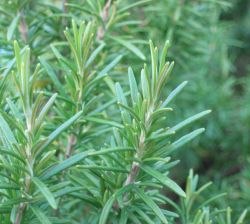
Branching woody stems with linear leaves that are green on top and hoary white underneath.
Rosemary Flowers:
Pale blue flowers form in leafy clusters.
Fun Rosemary Fact:
Rosemary was thought to strengthen the memory thereby making it the emblem of remembrance and fidelity. It was for this reason that an old wedding custom in many parts of Europe included the wearing of rosemary.
Growing Rosemary
(seeds, sowing, cultivation and harvest.)
Rosemary is easily propagated through cuttings, root division, and layering. However, it is most commonly grown from seed. Rosemary plants do best in rather poor, light soil, particularly if limy. They are from a warm climate and rosemary plants may need some protection during the winter. We planted ours in a spot somewhat protected from occasional snowstorms. It’s happy, but probably not as big as it could be in a warmer zone. Plus having rosemary growing by the door allows me to rub some of its heavenly scent on my fingers as I walk past it each day.
Sowing Rosemary Seeds.
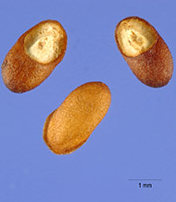
Sow rosemary seeds in drills 18-24 inches apart or in hills two feet apart with around 6 seeds per hill.
Growing rosemary seedlings can withstand being transplanted from seedbeds or flats to their place in your garden.
We recommend consulting our rosemary companion planting guide when deciding where to plant rosemary in your garden.
Cultivation.
Maintain loose soil and keep weed-free.
Rosemary Propagation.
To propagate rosemary by cuttings, cut 6 inches in May or June and set two-thirds of the length in the soil, in a moist and shady location. Move to their final growing location once established.
Division of rosemary can be done in spring or autumn.
Harvesting Rosemary.
Simply cut branches as needed for individual dishes. Looking for advice on how to dry rosemary? Check out our drying rosemary article which includes advice on the best time of day to harvest your rosemary along with a few ideas on how to use your bounty.
Rosemary Uses
Every part of you rosemary plant that is above ground can be used for flavoring your cooking.
Tender Leaves, Stems and Flowers
Fresh rosemary is used for flavoring stews, fish and meat sauces. Fresh or dried rosemary make an interesting addition to scrambled eggs.
Rosemary Oil


Rosemary oil is colorless or yellowish with a pleasant scent that hints of camphor. The preferred method for harvesting rosemary essential oil is through steam distillation. It is used extensively in perfuming soaps and in the manufacture of eau de cologne and perfumes.
You could hope that you could grow enough rosemary to make your own essential oil, but we recommend that you give this a try instead – Organic Rosemary Essential Oil. 30 ml (1 oz). 100% Pure, Undiluted, Therapeutic Grade.
Very informative and useful information. Would have been beneficial to have cautioned against growing mint around Rosemary. I placed a mint plant in my herb garden and it killed my Rosemary (six year old plant, three feet in diameter root base) completely during that summer. I was told that the roots of mint are so thick that they smother the roots of Rosemary completely. I started a new plant a couple of years ago in a new garden location and it is doing beautifully now! I will add sage now that I know it is a good companion. What about other herbs such as cilantro, garlic, shallots, etc.