Early History of Cumin
(Cuminum Cyminum, Linn.)
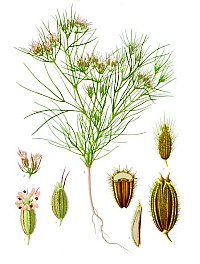
Among the Greeks, cumin symbolized excessive desire. Marcus Antoninus was given a nick-name that referenced the herb. Folklore of the time assumed that someone who was miserly must have eaten cumin.
Pliny was said to have listed cumin as “the best appetizer of all condiments.” He also suggested that smoking the seeds would cultivate a scholarly pallor that implied long hours of scholarly pursuits. Horace referred to the practice as exsangue cuminum or the bloodless pallor from cumin.
In the 1st Century BC, the Celts baked their fish with cumin.
Cumin history and folklore includes the belief that cumin “conferred the gift of retention” or faithfulness. This concept of retention extended to objects, birds and people. Burglars, attempting to steal anything that contained cumin, would be entrapped within the home of the owners of that item. Pigeons and other birds like cumin and they were often fed cumin to prevent them from straying. To ensure their men returned home, young women gave their sweethearts bread season with cumin or wine with cumin.
As with many of the herbs we researched, there is conflicting information about cumin history and Germany. One reference, on the medicinal uses of herbs, said that cumin seeds were added to bread as a condiment. But, another source, which focused on the folklore of plants, linked cumin to the “wood and forest folks of Germany, spirits inhabiting the forests”. In other words, common folk would not have eaten cumin for fear of those spirits according to the following poem from the time…
Peel no tree,
Relate no dream,
_Pipe_ no bread, _or_
Bake no cumin in bread,
So will God help thee in thy need.
From that same reference came the anecdote of a “forest wife” who after eating a “new baked loaf, given as an offering” was said to have screamed,
They’ve baken for me cumin bread,
That on this house brings great distress.
Both of those anecdotes would certainly support that sometime in history, Germans, who lived in or near forests feared eating cumin and would most likely not have included it in their bread. As to Germans living in the cities at that time, who perhaps did not fear the forest spirits, did indeed include cumin in their baking.
Cumin History – Early Medicinal Uses
The ancients used cumin to treat pallor of the face. And like so many of the herbs on Our Herb Garden, cumin was historically used to treat flatulence.
Cumin was also used in combination with other herbs as a poultice for the treatment of stitches and other muscle pains.
Cumin essential oil was used in strong doses as a light sedative for extremely nervous and excited individuals. In perhaps in a direct contradiction, small diluted doses were used to stimulate individuals impaired by disease.
Additional Cumin Information.
Our Herb Garden also has guides on Growing Cumin.